
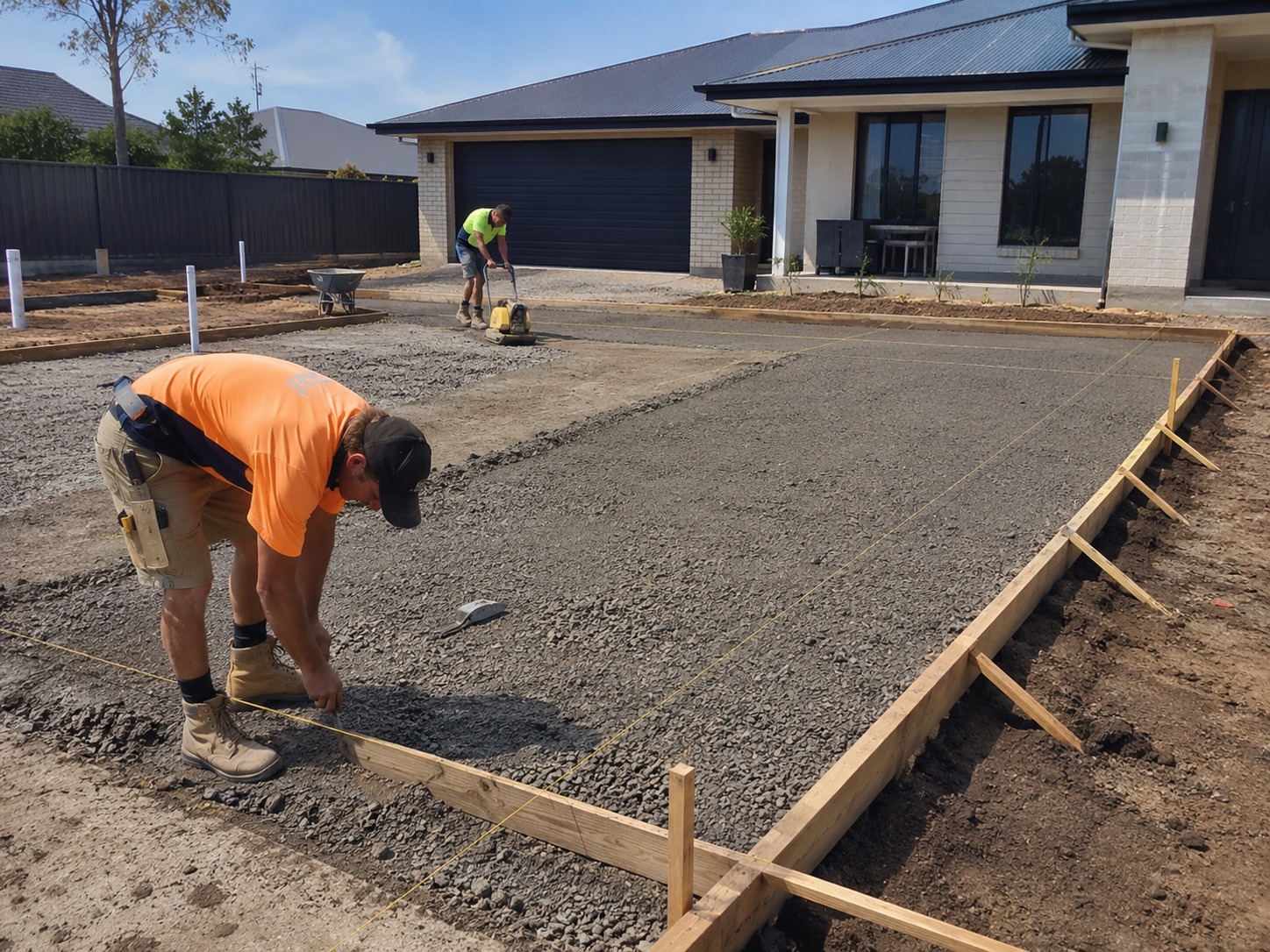
Concrete Pumping in Perth
Concrete pumping moves wet concrete from the truck to where it is actually needed, using a boom or line pump instead of wheelbarrows and manual handling. On Perth blocks with narrow side access, rear courtyards, upper-level slabs, pool surrounds or established landscaping in the way, pumping is often the only practical way to place a pour without tearing up the property to get a truck close.
A pump also places concrete faster and more consistently. A slab that goes in quickly stays workable across the whole pour, which means fewer cold joints, better compaction and a more even finish than a slow barrow pour in Perth heat.
Boom Pumps, Line Pumps and Site Access
Boom pumps deliver concrete over obstacles through a hydraulic arm and suit larger pours, upper levels and sites where the truck cannot get near the pour area. Line pumps push concrete through ground-level hose and suit tighter residential jobs, backyard slabs, footings, pool surrounds and confined spaces where a boom cannot be set up.
Choosing between them comes down to volume, distance, height and what the site will allow. We look at truck standing positions, overhead powerlines, ground conditions under outriggers, and the route the hose or boom has to take before committing to a method.
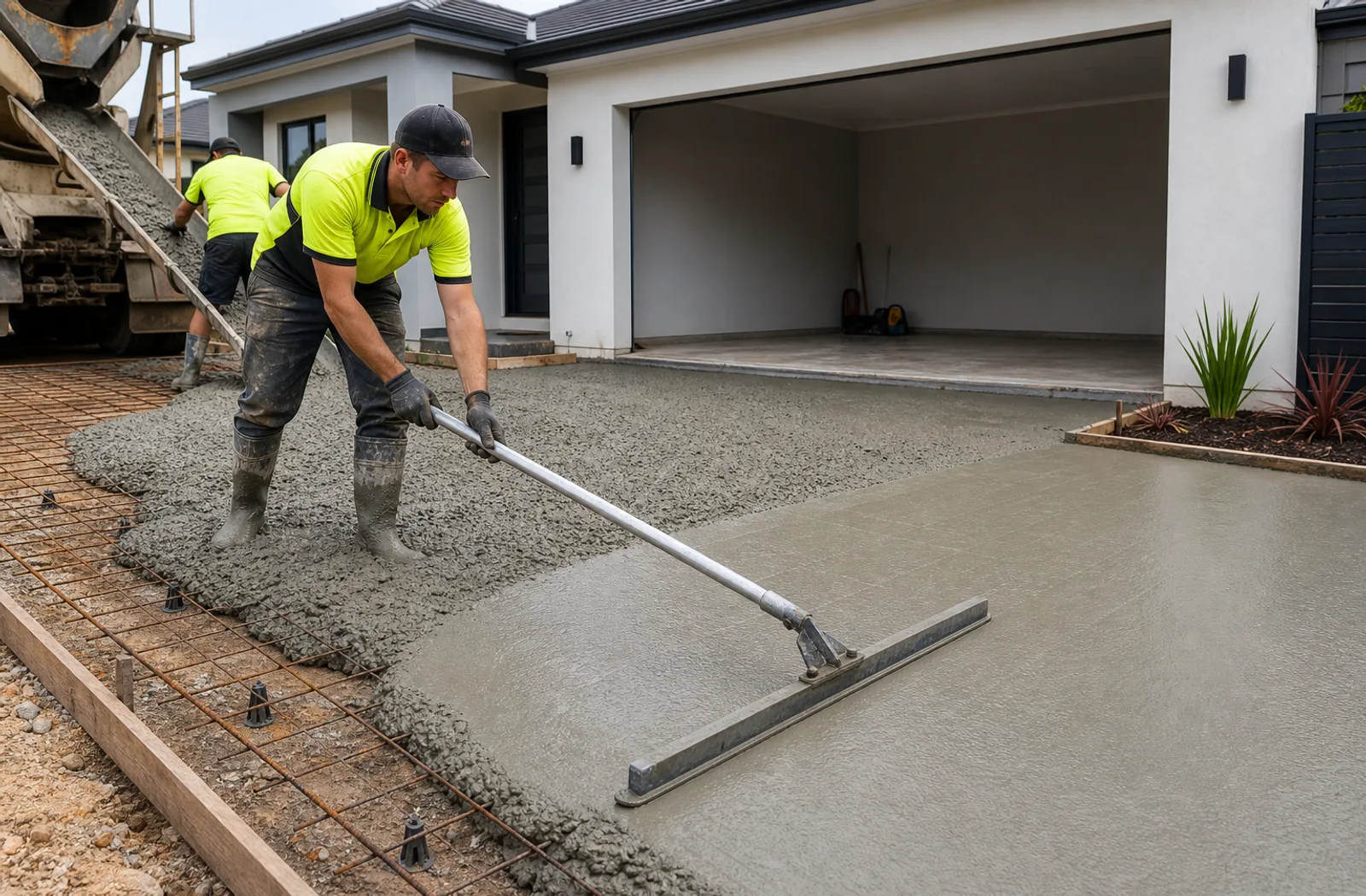
Planning A Pour That Runs Smoothly
Pumping is only one part of a successful pour. Formwork, reinforcement, the concrete mix and slump, the crew placing and finishing, and the order in which the pour progresses all need to line up with the delivery rate of the pump.
We coordinate the pump with the batching plant and the placing crew so concrete arrives at the rate the site can handle. That avoids trucks waiting on site, concrete going off in the line, and the rushed finishing that follows a badly timed pour.
Frequently Asked Questions
Helpful answers for Perth property owners planning concrete driveways, repairs, resurfacing and durable concrete surfaces.
What is concrete pumping and why is it needed?
Concrete pumping delivers wet concrete from the truck to the pour area through a boom or hose. It is needed where the truck cannot reach the slab directly, where the pour is above ground level, or where the volume is too large to barrow.
Do I need a boom pump or a line pump?
Boom pumps suit larger pours, upper levels and sites with obstacles to reach over. Line pumps suit smaller residential jobs and confined spaces at ground level. We recommend the right one after reviewing site access and volume.
Can a pump reach my backyard?
In most cases yes. A line pump can run hose through a side gate, and a boom can place concrete over a house or fence where there is clear standing for the truck and no overhead hazard.
How far can concrete be pumped?
Line pumps commonly run well over 50 metres of hose, and booms place concrete at height and distance depending on the machine. Distance, height, mix and slump all affect what is achievable.
Does pumping affect the concrete mix?
Yes. Pumped concrete needs a mix and slump suited to pumping. We confirm the mix with the supplier so it pumps cleanly without compromising the finished strength.
Is concrete pumping more expensive?
There is a pump cost, but it often reduces labour hours, shortens the pour and lowers the risk of a poor finish. On difficult-access sites it is usually the cheaper option overall.