
Civil Earthworks in Perth
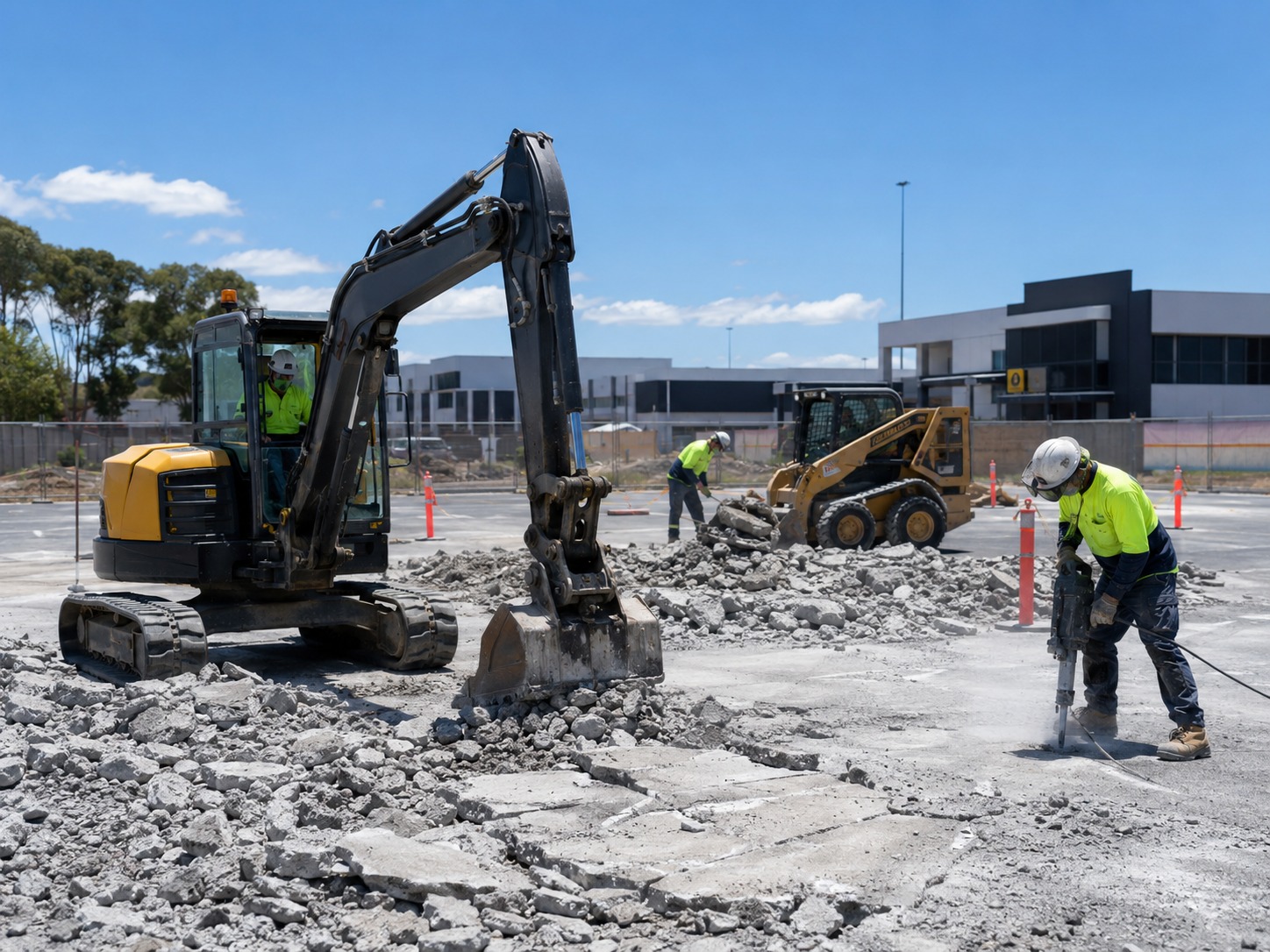
Civil earthworks cover the bulk ground preparation that has to happen before roads, carparks, hardstands, subdivisions and commercial slabs can be built. The scope includes site clearing, bulk excavation, cut and fill, levelling, compaction, drainage and the placement of road base. Getting these stages right determines whether the finished surface holds its level and drains properly for decades, or begins to fail within a few years.
Perth sand profiles, limestone bands and reactive clay pockets all behave differently under load, so earthworks here need local knowledge rather than a generic approach. We assess the ground conditions, plan the cut and fill balance, and build a compacted base that matches the loads the finished surface will actually carry.
What Civil Earthworks Includes
A typical civil earthworks scope starts with site clearing and the removal of vegetation, rubble and unsuitable material. Bulk excavation then brings the site to design level, with material either cut away or filled and compacted in layers. Batters, retaining lines and drainage falls are formed as part of the same process.
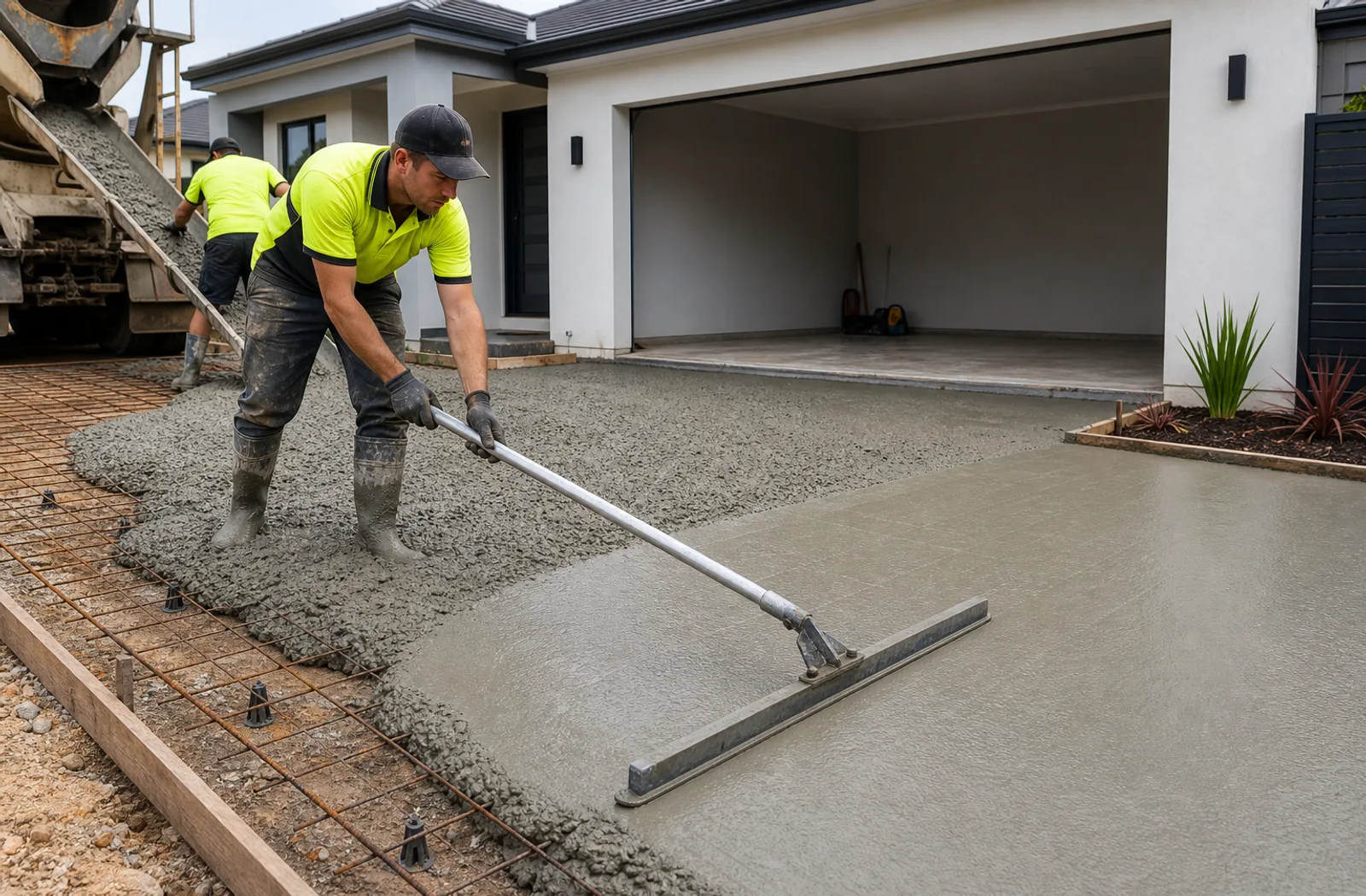
From there we place and compact road base or select fill, set levels for kerbing, pits and services, and prepare the finished surface for paving, asphalt or a concrete pour. Trenching for stormwater, sewer and service conduits is usually carried out in the same program so the site does not need to be reopened later.
Compaction, Drainage and Long-Term Stability
Compaction is the stage most often rushed, and it causes the most expensive failures. Fill placed in thick, uncontrolled layers settles unevenly and takes the surface above it with it. We compact in controlled layers to the specified density so the finished pavement or slab sits on a base that will not move.
Drainage is the other half of the equation. Ground that holds water loses strength, and a surface without adequate fall will pond, crack and deteriorate. Falls, subsoil drainage and stormwater connections are designed into the earthworks stage rather than added afterwards.

Frequently Asked Questions
Helpful answers for Perth property owners planning concrete driveways, repairs, resurfacing and durable concrete surfaces.
What is the difference between earthworks and excavation?
Excavation is the removal of soil and rock from a specific area. Earthworks is the broader scope, covering clearing, excavation, filling, levelling, compaction and drainage across an entire site.
Do you handle commercial and subdivision earthworks?
Yes. We work on commercial developments, carparks, hardstands, subdivisions and civil infrastructure, as well as larger residential sites.
How long do civil earthworks take?
Duration depends on site area, the volume of cut and fill, ground conditions, access and weather. A small commercial pad may take a few days, while a subdivision stage can run for several weeks.
Do I need approvals before earthworks begin?
Many earthworks projects require council or development approval, particularly where levels, retaining, drainage or boundaries are affected. We can advise what is typically needed and work to approved plans and levels.
What does cut and fill mean?
Cut and fill is the process of excavating material from higher parts of a site and using it to build up lower parts, balancing the site to design level and reducing the amount of material carted in or out.
Do you locate underground services before digging?
Yes. Service location is carried out before excavation begins, using dial-before-you-dig information and on-site detection so power, water, gas and communications assets are not struck.